Ubud
Central Bali · Bali
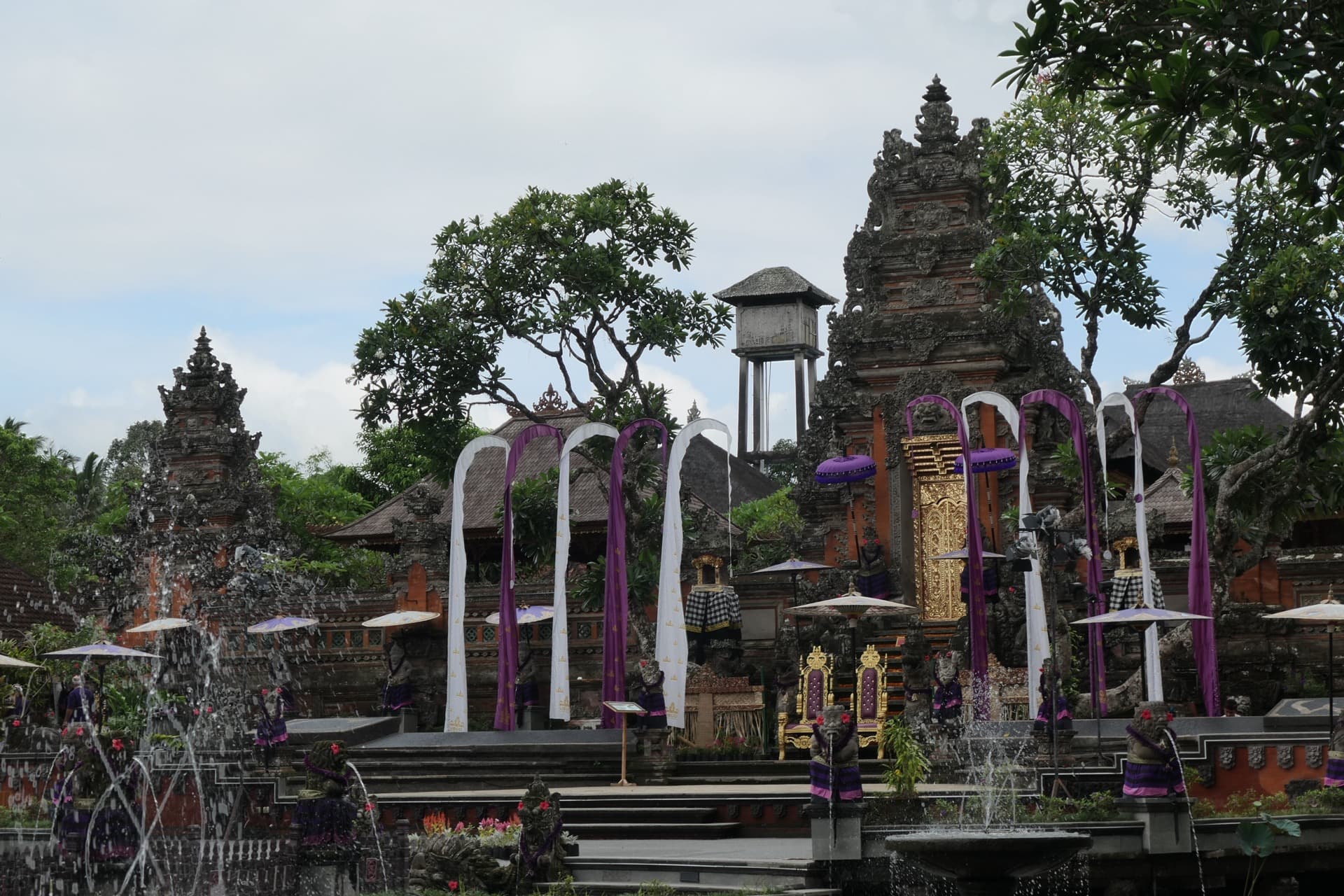
Photo: Anandajoti / Wikimedia Commons (CC BY-SA 4.0)
Ubud shown against the other locations in Central Bali — the other pins are clickable.
Area Today
Ubud is Bali's cultural and wellness capital — rice terraces, temples, art markets, yoga studios and a long-established creative and expat community, sitting inland away from the beach-driven coastal development I track elsewhere on the island.
Ubud's growth has been shaped by wellness tourism, yoga retreats and its long-standing reputation as Bali's artistic and spiritual centre since the late 1960s, when artists began settling there — a positioning that predates the coastal boom by decades and has produced a different kind of built environment: boutique guesthouses and retreat centres integrated into rice-terrace landscapes rather than dense beach-club strips.
Ubud district has roughly 74,800 residents across about 42 square kilometres, and the central village alone receives an estimated 3 million-plus foreign visitors a year — many multiples of its resident population. It's widely regarded as Bali's main tourism hub outside the coast, and Ubud now ranks as the third most popular area on the island for new property projects, after Uluwatu and Canggu, with land prices already higher than most of the Bukit. That demand comes at a real cost to the surrounding landscape: the environmental organisation Walhi Bali estimates that 3 to 6 percent of farmland in Gianyar, Badung and Tabanan — the regencies around Ubud — is converted to commercial use every year, and Bali's governor has cited a province-wide loss of 600 to 700 hectares of productive agricultural land annually.
Where This Is Heading
Observation, not predictionUbud continues to draw long-stay wellness and creative visitors, and development pressure here tends to express itself as more boutique retreat and villa product tucked into the surrounding rice terraces, rather than the kind of dense commercial strip development seen on the coast. I'd expect that pressure to keep pushing outward the same way it has on the coast — what's in Ubud today may well be in Sidemen tomorrow. I'd expect Ubud to keep its wellness-and-culture identity as its core differentiator rather than converge toward the coastal beach-club model; the market here draws a genuinely different visitor, and that keeps its development pattern distinct even as the Consolidation-to-Stagnation pressures I see elsewhere start to show up here too.
Investment Context
Ubud supports a well-established retreat, wellness and boutique-villa rental market with strong repeat and long-stay demand — a meaningfully different investment profile from the short-term, nightlife-driven rental markets on the coast. One notable project sits deliberately away from the coast, roughly thirty minutes from Ubud and fifteen from the beach, specifically because land there is cheaper than in the coastal areas of South Bali — a full masterplanned street of five projects and about 333 units, built on the logic of creating a new micro-market rather than competing directly in Ubud or on the coast.
Good to know
Rice fields are making way
The rice terraces around Ubud are tied to the subak irrigation system, which is under growing pressure from building.
A busy centre on small roads
The narrow roads in the centre cannot cope with the pressure, so traffic jams are common. Outside Ubud the roads are fine, including the access roads from Canggu and to the rest of the island.
Know the zone before you build
Building in the wrong zone, especially the green zone, can lead to demolition and permits that are refused.