Cemagi
West & Southwest Coast · Bali
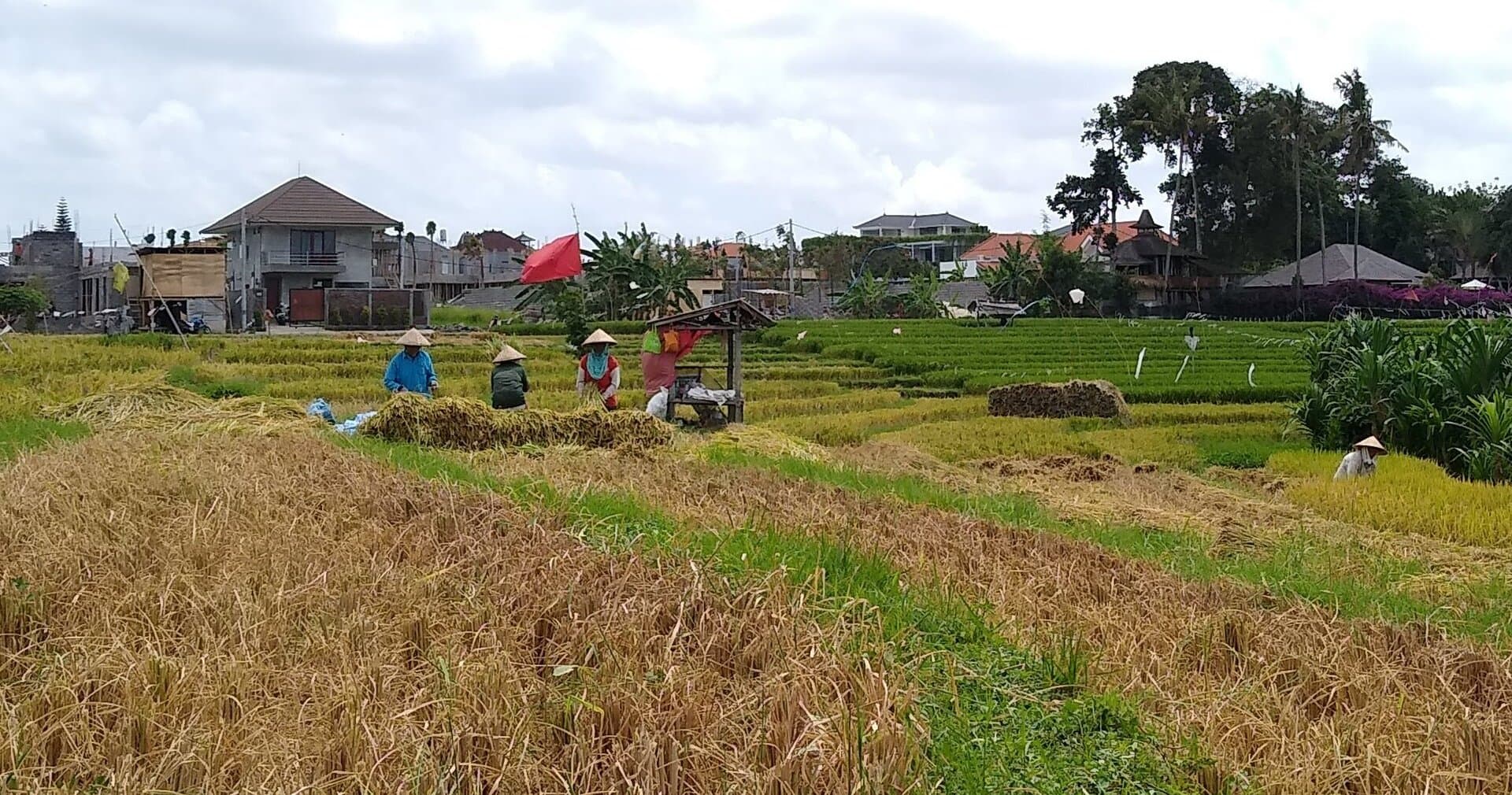
Photo: Mx. Granger / Wikimedia Commons (CC0). Rice fields with houses behind, in Canggu, next to Cemagi.
Cemagi shown against the other locations in West & Southwest Coast — the other pins are clickable.
Area Today
Directly west of Seseh, Cemagi is also seeing rising development, but at a clearly slower pace. The product here is mostly standalone villas, residential projects and small-scale accommodation — fewer restaurants, commercial venues and tourist draws than Canggu, Pererenan or Seseh.
Cemagi is following the same westward development corridor as the rest of this coast, but its growth has been steadier and less dramatic than Seseh's current surge. Villas and residential projects have been added gradually rather than through the kind of rapid, restaurant-and-beach-club-led boom visible one step back toward Canggu.
The clearest limit on Cemagi's growth is beach access: it's growing, but is unlikely to become as popular as Seseh because it lacks good beach access. That's a structural constraint, not a temporary gap — it's the main reason Cemagi sits a stage behind Seseh despite being right next to it.
Where This Is Heading
Observation, not predictionI'd expect Cemagi to keep developing steadily as a quieter, more residential alternative rather than becoming the next Seseh-style hotspot — its constrained beach access is a real structural limit, not a temporary gap in infrastructure that gets fixed.
Investment Context
This suits an investor looking for a calmer, longer-hold residential position on this coast rather than a short-term-rental play built around beach-club footfall — land here is priced accordingly, below Seseh, and I'd expect it to stay that way given the access constraint.
Good to know
Limited beach access
Beach access is the main reason Cemagi is expected to develop more slowly than Seseh.